 Written by Katie Welch, Senior Biohazard Cleaning Technician · 8+ years in the industry
An old urine smell that keeps coming back is almost always in the floorboards, not the carpet. Urine soaks through carpet and underlay into the wood, where uric acid crystals stay and release smell whenever the air is warm or damp. To get rid of it you must lift the flooring, treat the boards with an enzyme cleaner, let them dry, then seal them with a shellac-based primer. Replace boards that are soft, black or still wet.
We mostly see this in rented properties, homes where an elderly person has been incontinent, hoarded houses, and homes with pets. The carpet gets cleaned or replaced, the room looks fine, and then the smell comes back anyway. This guide explains why, and how to fix it properly.
Urine smell that won’t shift? We find it and fix it
Free quotes from photos. 24/7, 365 days a year, across the UK.
Why does an old urine smell keep coming back?
Urine contains both urea and uric acid. When urine dries, bacteria break the urea down into ammonia, which produces a sharp smell.
Uric acid forms crystals which don't dissolve in water or with the use of normal household cleaners. These crystals soak deep into porous materials like underlay, floorboards, chipboard, and any gaps. Each time the room warms up or the air gets damp, the crystals release smell again. That's why it often seems worse:
- on warm days
- when the heating comes on
- after mopping or steam cleaning
- in wet weather
Simply cleaning the surface won't dissolve the crystals as it can't reach them. Air fresheners and plug-ins will only mask the smell for a few hours.
How do you know if urine has soaked into the floorboards?
Signs that the problem is under the flooring:
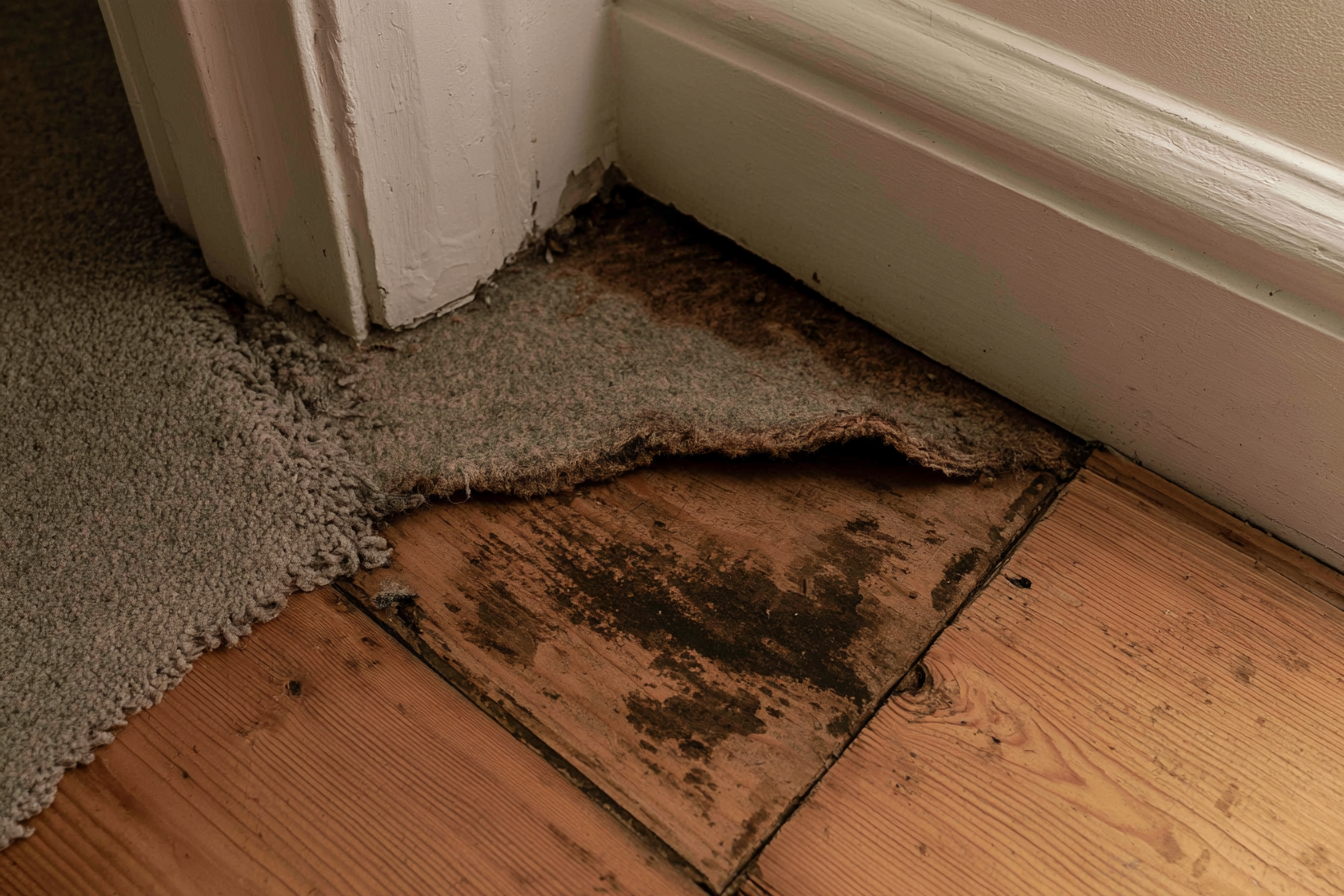
- The smell came back after the carpet was cleaned or replaced.
- It's strongest at floor level, or in one corner of the room.
- The carpet or underlay has dark patches or a crisp feel when you lift it.
- The boards underneath are stained dark, grey or black.
- The boards feel soft or spongy when you press them.
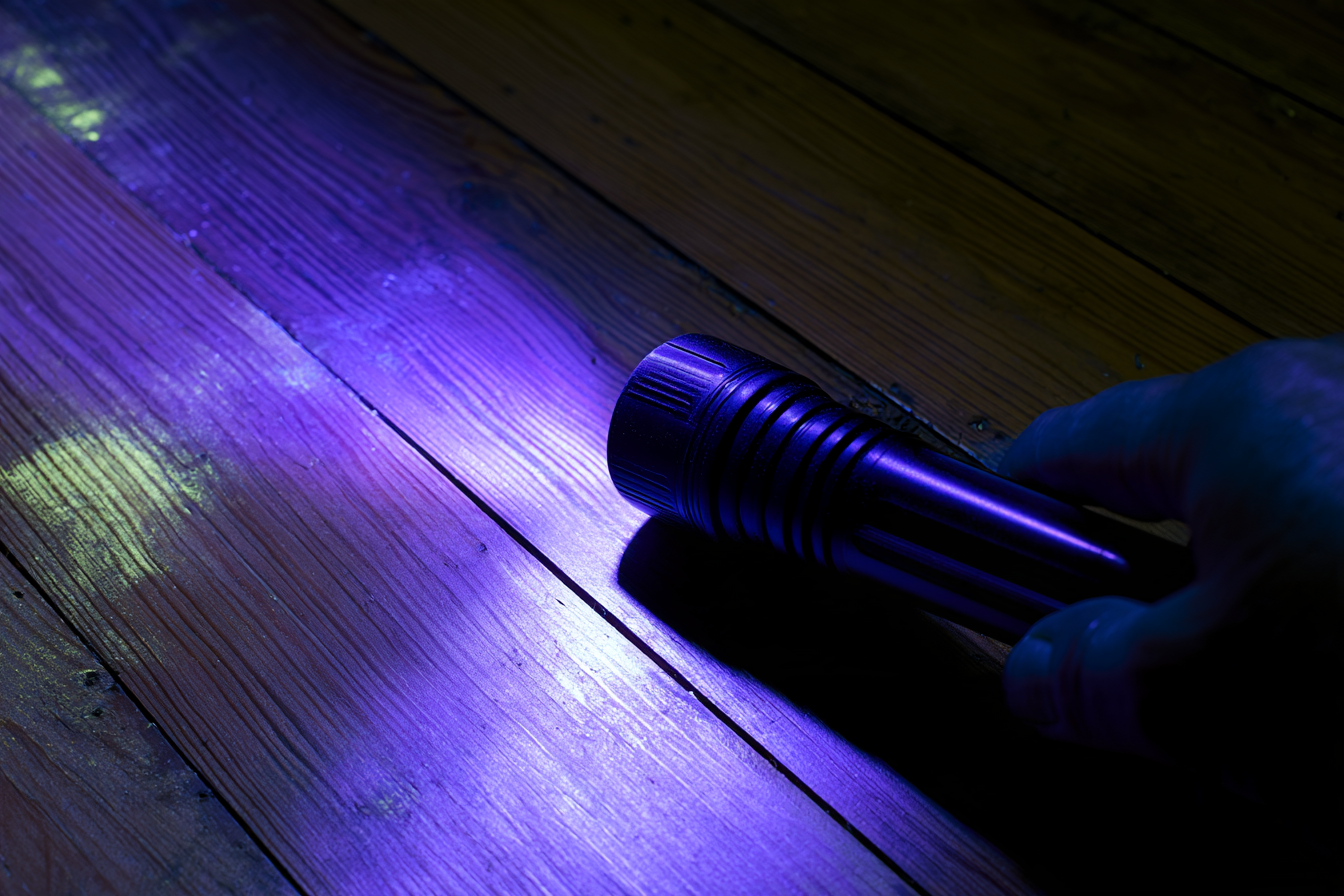
One of the quickest ways to map exactly where urine has spread is by using a UV torch. The UV light makes old urine glow yellow-green in a dark room. It's here you may notice stains are often much bigger on the boards than they initially looked on the carpet.
Send us a few photos for a free, honest quote
We’ll tell you straight whether the boards can be treated or need replacing.
How to get urine smell out of floorboards
For small, light stains on solid boards, you can try this yourself. Wear nitrile gloves and a mask, and keep the room ventilated.
1Lift the carpet and underlay.
Bag them up. Urine-soaked underlay can't be saved.
2Find every stain with a UV torch
and mark it with chalk or tape.
3Clean the surface
with warm water and a little washing-up liquid to remove loose residue. Don't flood the boards.
4Apply an enzyme cleaner made for urine.
The enzymes break down the uric acid crystals. Soak the stain well and leave it for as long as the product says, usually several hours.
5Let the boards completely dry.
This can take 2 to 3 days. Ideally use a dehumidifier if you can.
6Check the smell.
If it's still there, repeat the enzyme treatment.
7Seal the boards with a shellac-based primer.
This locks in any trace that's left so it can't release smell again.
8Refit new underlay and carpet
only when the boards are dry and the smell has gone.
Don't use bleach
It will not work as it doesn't break down uric acid, and mixing bleach with urine can release harmful gases.
Do I need to replace floorboards after urine damage?
Not always. Many boards can be treated and sealed. However, you will need to replace them if:
- they're soft, spongy or rotten when you press them
- they're stained black right through, not only on the surface
- they're chipboard or MDF, because these swell and soak up urine like a sponge and almost never come clean
- the smell is still there after two enzyme treatments and the boards are completely dry
- urine has reached the joists below
Check underneath
You will need to check the joists and the subfloor if urine has been soaking in for months or years. This is especially the case in hoarded homes or after a long period of incontinence. Replacing the top boards won't help if the source of the smell lies untreated underneath.
Why DIY often doesn't work on old urine
Most failed DIY jobs have the same few causes:
- The carpet was replaced but the boards underneath weren't treated. In this case the new carpet will start to smell within weeks.
- The boards were painted with a normal paint. Water-based paint doesn't seal in odour.
- The enzyme cleaner didn't reach deep enough or wasn't left on long enough.
- Hidden areas were missed, for example under furniture or along skirting boards.
- The boards were sealed while still damp, which traps the moisture and the smell.
How professionals remove urine smell from floorboards
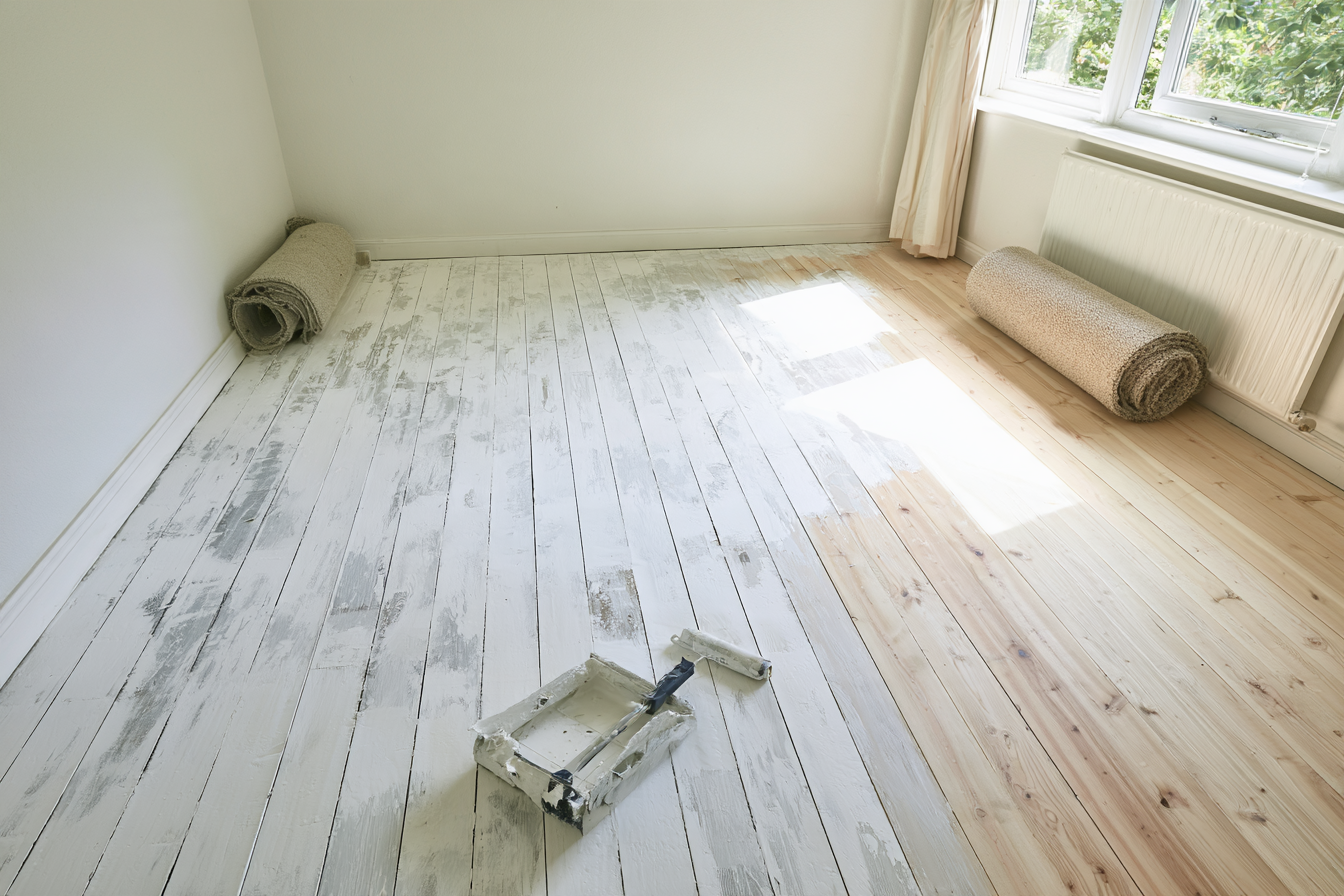
When we treat urine-soaked floors, we:
- Map the contamination with UV light and moisture meters.
- Remove and dispose of soiled carpet, underlay and boards. These are always disposed of legally.
- Treat the boards and subfloor with professional enzyme and disinfectant products.
- Dry the area with commercial dehumidifiers.
- Seal the boards with an odour-blocking primer.
- Treat the air with fogging or ozone to clear any smell left in the room.
How much does it cost?
The price will depend on how many rooms have been affected and whether any boards need replacing.
We quote for free from photos, and we'll always tell you honestly whether the boards can be saved.
Find out more about our urine and human waste cleaning service.
If the smell is part of a bigger clean, see our hoarder cleaning and after death cleaning services.
Frequently asked questions
Why does my house smell of urine when I can't see any stains?
The urine is probably under the carpet, in the underlay or the floorboards. The smell builds up from uric acid crystals there and continues to get worse when the room is warm or damp. A UV torch will show you where it is.
Will a new carpet get rid of a urine smell?
No, not if the urine has reached the boards. The smell will only end up coming back through the new carpet, usually within a few weeks. You must treat and seal the boards first.
Does vinegar get rid of urine smell in floorboards?
Vinegar can help with fresh, surface urine, but it won't break down old uric acid crystals deep in wood. An enzyme cleaner works much more efficiently on old stains.
Can urine-soaked floorboards be saved?
Often, yes. Solid boards that are still firm can usually be treated and sealed. However, soft, rotten, chipboard or MDF boards should be replaced.
Is an old urine smell harmful?
Yes, strong ammonia from old urine can irritate the eyes, nose and lungs, especially in small rooms. Also, damp, urine-soaked boards can grow mould and bacteria, which are harmful to your health.
How long does it take to get rid of the smell?
A proper treatment takes between 2 and 4 days, mostly due to the drying time. If boards need replacing, add another day.

Old urine smell? We can get rid of it for good
We map the contamination, remove what can’t be saved, treat and seal the boards, and clear the smell from the room. Across the UK.
- Free quotes from photos
- 24/7, 365 days a year
- Google 4.9 (183 reviews)
- Trustpilot 4.9 (96 reviews)