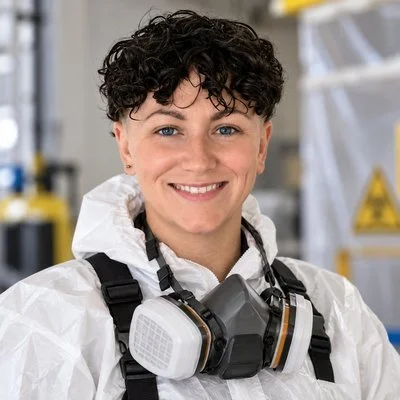
 Written by Katie Welch, Senior Biohazard Cleaning Technician · 8+ years in the industry
Treat blood and body fluids as dangerous until the area has been professionally cleaned. Hepatitis B can survive on surfaces for at least 7 days, and hepatitis C for up to 6 weeks in lab studies. Fluid that has soaked into carpets or floorboards stays a hazard until it is removed. There is no safe waiting period.
Losing someone is hard enough, but finding out that their home now needs cleaning can feel overwhelming. Many families wonder if the dangerous aspect of the cleaning will pass with time. Unfortunately, time alone doesn't make the room safe.
Bodily fluids can stay dangerous for days or even weeks after death. This is because some viruses, such as hepatitis B, can survive on surfaces for at least seven days. In laboratory studies, hepatitis C has survived for up to six weeks.
As a result of this if fluid has soaked into carpets or floorboards, it will remain a hazard until it is physically removed. Unfortunately, there is no "safe" waiting period that will make the hazard go away. This means bodily fluids must be treated as infectious until a professional has cleaned the area.
This guide explains the risks further and helps you decide what to do next.
Need help after a death? Talk to us in confidence, 24/7
Our team can usually be onsite within 2 hours, anywhere in the UK.
Which Body Fluids Carry a Risk?
After a death, a range of fluids can be left behind. These include:
- Blood
- Vomit
- Urine and faeces
- Decomposition fluids, if the death went unnoticed for some time
Each of these can carry harmful viruses or bacteria. It's impossible to tell if a fluid is infectious just by looking at it. That's why professionals will treat all bodily fluids as hazardous.
How Long Do Viruses Survive Outside the Body?
The biggest concern is bloodborne viruses. These are viruses carried in blood and some other body fluids.
- Hepatitis B can stay infectious on surfaces for at least 7 days, even after the blood has dried.
- Hepatitis C has remained infectious for up to 6 weeks at room temperature in laboratory studies.
- HIV does not survive long outside the body. The risk is low, but blood should still be handled with care.
Drying does not make blood safe; in fact, dried blood can be almost invisible. This makes accidental contact with it more likely, which increases overall risk.
Health warning
Never touch blood or body fluids with bare hands. Do not walk through affected areas or let children or pets into the room. If you have touched body fluids through broken skin, your eyes or your mouth, wash the area and call NHS 111 straight away.
What About Bacteria?
Bacteria behave differently from viruses. Viruses slowly weaken outside the body, whereas bacteria can keep multiplying. This is because bodily fluids give bacteria warmth, moisture and food to multiply.
This means in a closed room, contamination can get worse over time rather than better. This is especially true after an unattended death.
Decomposition fluids can seep through flooring and into the subfloor beneath. This means that strong odours can be trapped in these areas. It will require professional grade cleaning to permanently remove these odours.
The odour is something you never forget. Please don't put yourself through it. Let a professional deal with it for you.
Katie WelchSenior Biohazard Cleaning Technician, Emergency Clean UK · 450+ biohazard cleans
Why Waiting Makes Things Worse
It is completely understandable that you may want to leave the room closed until you feel ready. However, delays tend to cause three main problems:
- Deeper soaking. This means fluids will keep spreading into carpets, underlay, mattresses and floorboards.
- Stronger odour. Smells will settle into soft furnishings, walls and plaster.
- Higher costs. Long term, it will mean more materials need removing, so the cleaning takes longer.
You do not need to make every decision at once. But arranging a professional assessment early protects your health and the property.
Not sure if it's safe to go in? We'll assess it for you
Call us and a specialist will talk you through what to do next, day or night.
Why DIY Cleaning Rarely Works
Many people try to clean up on their own. They often do it out of love or a wish to keep things private. Unfortunately, it is unlikely to be successful and can put your health at risk.
Here is why:
- Bleach only cleans the surface. It cannot reach fluid that has soaked into carpet or wood.
- Wiping can spread contamination to clean areas.
- Household gloves and masks do not provide adequate protection.
- Scrubbing dried stains can release particles into the air, which can be inhaled.
- Contaminated waste needs safe, legal disposal.
There is also the emotional toll. Cleaning up after a loved one can be deeply distressing. Nobody should feel they have to do it themselves, which is why our professional teams are here to help.
How Professionals Make the Area Safe
A specialist clean follows a set process to remove all risk and ensure a safe result.

1Step 1: Assessment
A technician inspects the area. They check how far fluids have spread, including under flooring. It's crucial to identify if any fluids have become hidden.
2Step 2: Protection and containment
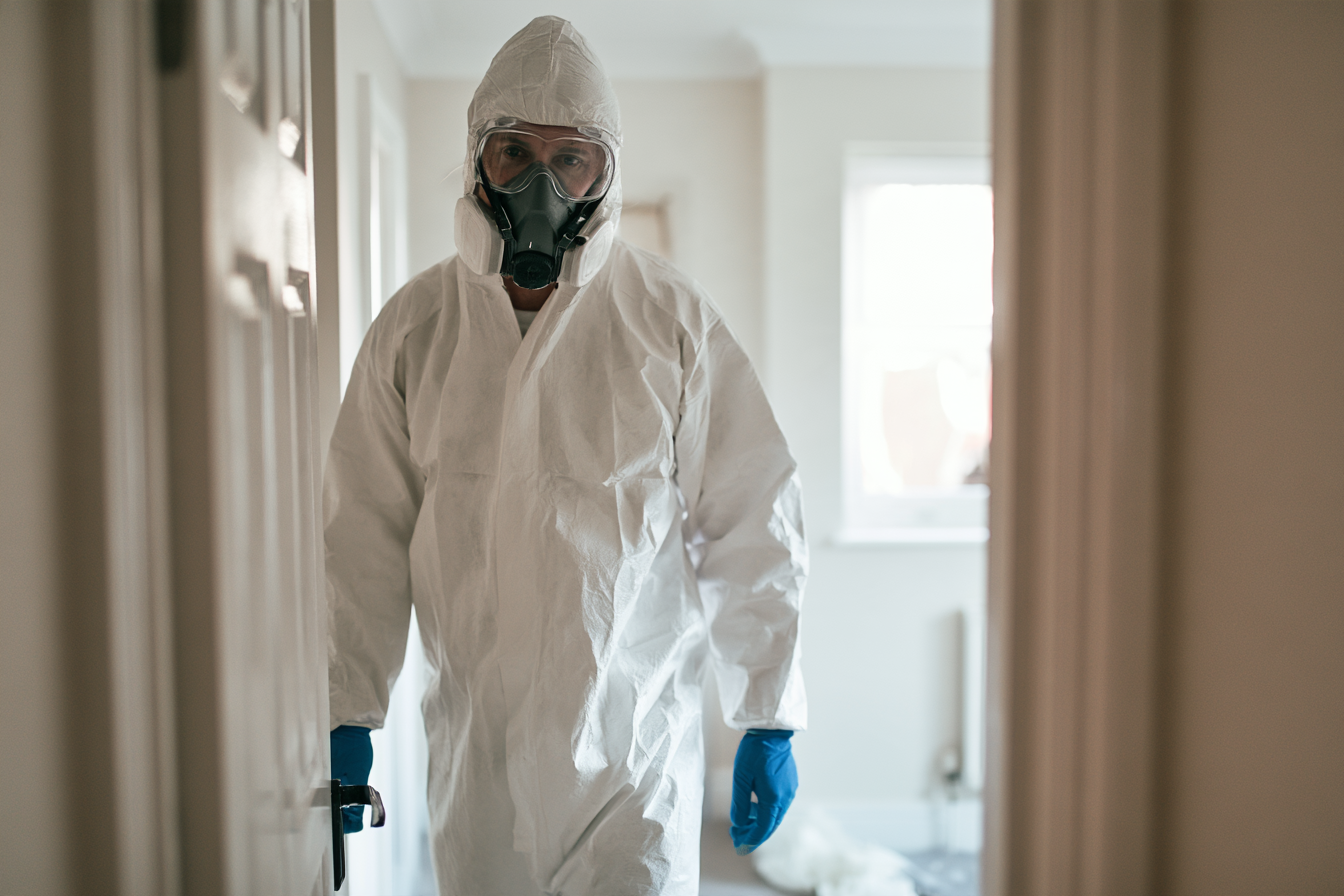
The team wears full protective equipment. They also ensure affected areas are sealed to prevent contamination in the home.
3Step 3: Removal of contaminated materials
The team will identify anything that cannot be fully cleaned as something to be removed. This may include carpets, underlay, mattresses and sections of flooring.
4Step 4: Cleaning and disinfection
Hard surfaces are cleaned, then treated with professional disinfectants tested to kill viruses and bacteria (BS EN 14476 and BS EN 1276).
5Step 5: Odour removal
Our teams carry out specialised odour removal processes, such as ULV fogging. This will treat the lingering odours at their source, rather than just temporarily mask it.
6Step 6: Safe waste disposal
All contaminated waste is bagged, sealed and taken away by a licensed waste carrier. If hazardous waste is not disposed of correctly, you may face serious legal risk.
7Step 7: Final check
The room is inspected again to ensure it is clean and safe before it is handed back to you.
Why Use a Professional?
A professional team removes the risk, not just the visible mess. They also take the burden off you at a very difficult time.
- Trained technicians who understand bloodborne pathogens
- Correct protective equipment and disinfectants
- Legal disposal of hazardous waste
- Discreet, unmarked vehicles on request
- Compassionate staff who treat the home with respect
- 24/7 response, 365 days a year
For businesses, this work is governed by law. The Control of Substances Hazardous to Health Regulations 2002 (COSHH) cover biological agents such as bloodborne viruses. The Hazardous Waste Regulations 2005 and the Environmental Protection Act 1990 control how contaminated waste is moved and disposed of. A reputable company will follow all of these.
How Much Does It Cost?
Every situation is different, so the cost depends on how far fluids have spread and how much needs to be removed.
Buildings and contents insurance may cover some or all the cost. It's important to check your policy and speak to your insurer early. Your insurer may send a loss adjuster to assess the damage. If there is any excess, you will usually need to pay this.

If You Are a Landlord or Property Manager
A death in a rented property brings legal duties as well as practical ones.
Under the Homes (Fitness for Human Habitation) Act 2018, a rented home must be safe and free from serious hazards. Contamination from body fluids can make a property unfit to live in.
Councils assess rented homes using the Housing Health and Safety Rating System (HHSRS), under the Housing Act 2004. Since June 2026, it covers 21 hazards. One of these is domestic hygiene, pests and refuse, which includes sanitation. Councils can take enforcement action where serious hazards are found.
The Renters' Rights Act 2025 will raise standards further. It gives the government power to extend Awaab's Law and the Decent Homes Standard to private rentals. Neither applies to private landlords yet. The government is still consulting on when Awaab's Law will apply to private rentals. For the Decent Homes Standard, it has proposed 2035 or 2037. Acting fast on health hazards now puts you ahead of both.
As an employer, you also have duties under the Health and Safety at Work Act 1974 and COSHH. You should never ask staff or general cleaners to deal with body fluids without proper training and equipment.
These housing laws apply in England. Scotland, Wales and Northern Ireland have their own rules, but the duty to provide a safe home is similar.
A professional clean gives you:
- A safe, re-lettable property
- Documented proof that the work was done to standard
- Waste transfer records for your compliance file
- Support with insurance claims
Frequently Asked Questions
How long do body fluids stay infectious after a death?
Hepatitis B can survive on surfaces for at least 7 days, and hepatitis C for up to 6 weeks in laboratory studies. Fluid that has soaked into carpets, mattresses or floorboards stays a hazard until it is physically removed.
Is dried blood safe to touch?
No. Drying does not make blood safe, and hepatitis B survives in dried blood for at least a week. Never touch it with bare hands, and don't scrub dried stains, which can release particles into the air.
Is it safe to go into a house where someone died?
The rest of the house is usually safe for a short visit once the body has been removed, as long as the affected room stays closed. Keep children and pets out, and don't touch stains, bedding or furniture in that room.
Can I clean up after a death myself?
It isn't recommended. Bleach only cleans the surface, household gloves and masks don't protect you, and contaminated waste has to be disposed of legally by a licensed waste carrier.
Will the smell go away on its own?
No. The smell comes from fluids soaked into flooring, furniture and plaster. It stays, and often gets worse, until those materials are removed and the area is professionally treated.
Does insurance cover cleaning after a death?
Buildings and contents insurance may cover some or all of the cost. Check your policy and speak to your insurer early. They may send a loss adjuster, and you will usually pay any excess.
How quickly can you come out?
We work across the UK, 24 hours a day, 365 days a year, and can usually be onsite within 2 hours.
Let Us Take This Off Your Hands
There is no time limit after which body fluids simply become safe. The only way to remove the risk is by carrying out a thorough, professional clean.
At Emergency Clean UK, our team handles death and trauma cleaning with care, discretion and respect. We work across the UK, day and night.
You do not have to face this alone.
Talk to us in confidence
Calm, discreet help after a death. 24 hours a day, 365 days a year, across the UK.
- Usually onsite within 2 hours
- Licensed waste carrier CBDU626436
- Google 4.9 (183 reviews)
- Trustpilot 4.9 (96 reviews)