 Written by Katie Welch, Senior Biohazard Cleaning Technician · 8+ years in the industry
As an executor, you can secure, insure and start sorting a hoarded house before probate. Don't throw away anything of value until the estate has been valued. Search carefully for wills, bank documents, cash and jewellery, which are often hidden in the clutter. The cost of clearing and cleaning is normally paid from the estate as an executor's expense. A professional hoarder clearance usually takes 2 to 10 days, depending on the size of the house and how full it is.
Losing a parent is a difficult time. Finding out their home is full to the ceiling, and that it's now your job to deal with it, can feel overwhelming. Many of the executors we work with didn't know how bad things had become until after the death.
This guide takes you through what to do, in order, and how to avoid the mistakes that cost families money and time.
Dealing with a parent’s hoarded home? We can take it off your hands
Free quotes from photos or a video call. Discreet, judgement-free teams across the UK.
What to do first
- Check whether the death happened in the house. If your parent died at home and wasn't found straight away, the room will need a specialist after death clean. It's important for this to be carried out before anything else is touched.
- Secure the property. Change any locks if the keys are unaccounted for, and make sure all windows and doors are locked.
- Tell the home insurer. Many policies limit cover once a property has been empty for 30 to 60 days. Call and ask what they need from you in order to keep it insured.
- Turn off the water if the house will be empty in cold weather. This prevents any pipes from bursting.
- Tell the council. An empty home is usually exempt from council tax after a death until probate is granted, and for up to 6 months after.
- Stop post being lost. Set up Royal Mail redirection, because letters about bank accounts, pensions and bills will keep arriving.
- Don't start throwing things away yet. Read the next section first.
Can an executor clear a house before probate?
Yes, an executor can start sorting and clearing a house before probate is granted. You can't sell the house until you have probate, but you can (and often should) make it safe and start going through it.
The important rule
Don't dispose of anything that might have value until the estate has been valued. The estate's value for probate and inheritance tax is calculated at the date of death. Throwing out or giving away items of value before that can cause problems with HMRC and with other beneficiaries.
Rubbish, food waste and items that are clearly worthless can usually go straight away. If you're not sure, set it aside.
When to get legal advice
If there's any dispute between family members, or the estate may owe inheritance tax, speak to a probate solicitor before clearing.
Finding documents, cash and valuables in a hoarded house
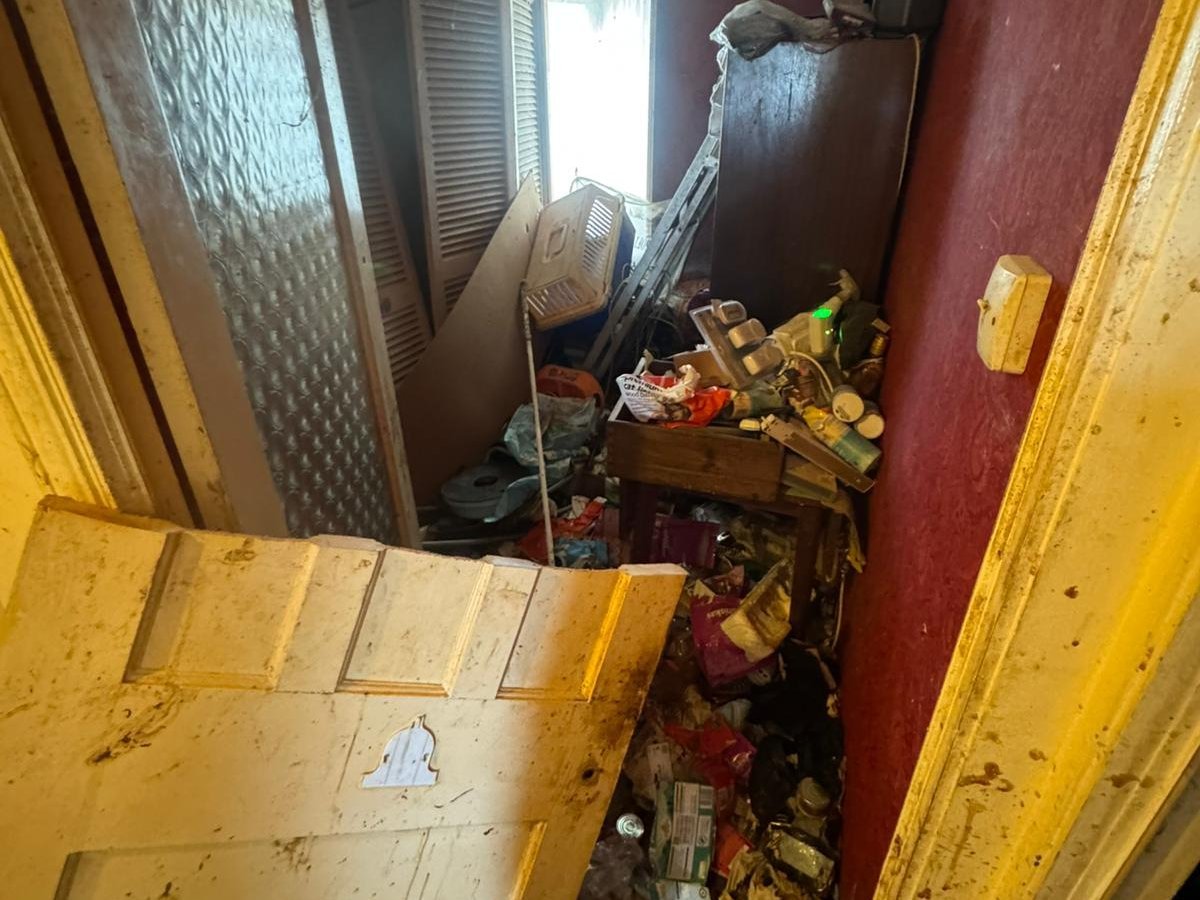
People who hoard often keep important things mixed in with everything else. In hoarded homes, we regularly find:
- wills and codicils
- bank statements, savings books, share certificates and Premium Bonds
- cash, sometimes large amounts, in envelopes, tins, books and clothing
- jewellery and watches
- unopened post about pensions, bills and debts
- photos and family items that aren't valuable but can't be replaced
That's why a hoarded house shouldn't be cleared out in a hurry and just emptied into a skip. Every bag, box and drawer needs to be checked first.
When we clear a hoarded home for an executor, we sort item by item. Documents, cash, valuables and personal items are always set aside for you, with a list of what we found and where.
We sort item by item before anything is thrown away
Documents, cash, valuables and personal items are set aside for you, with a list of what we found and where.
Is it safe to clear a hoarded house yourself?
In most cases, it's not safe to clear a hoarded house alone. This is because hoarded homes can be dangerous, especially if they've been closed up for a while. Common hazards include:
- rat and mouse droppings and urine, which can carry disease
- mould from damp, blocked airflow and leaks
- human or animal waste
- unstable piles that can collapse
- weak floors under very heavy loads
- sharp objects and needles
- fire risk from blocked exits and stored paper
If you go in yourself
If you want to go through the house yourself, wear gloves, a dust mask and sturdy shoes. Don't go in alone, and don't move anything that looks contaminated.
Who pays for clearing a hoarded house after a death?
The cost is normally paid from the estate. Reasonable costs for securing, clearing and cleaning a property are executor's expenses. So you shouldn't have to pay out of your own pocket in the long run.
- Keep every receipt and invoice.
- Get a written, itemised quote before work starts.
- If the estate doesn't have cash yet, some executors pay up front and reclaim it once the bank releases funds. Check with the bank or solicitor handling the estate.
If the property is rented, the tenancy usually continues after death until it is ended properly. Talk to the landlord about a timescale for clearing it.
How much does a probate house clearance cost for a hoarded home?
Hoarder clearance in the UK usually costs from £750 for a small, light job up to £15,000 or more for a severe whole-house clearance with biohazards. The price depends on:
- the size of the property and how many rooms are full
- how severe the hoarding is (we use the clutter image rating scale)
- whether there are biohazards such as rodent, human or animal waste to deal with
- how much sorting is required before items go
- access, parking and how many loads of waste there are
See the full breakdown in our cost to clean a hoarder's house guide. We quote for free, and we can quote from photos or a video call if you live far away.
How long does it take?
| Property | Typical time |
|---|---|
| Flat or small house, moderately full | 2 to 3 days |
| 3-bed house, full throughout | 4 to 7 days |
| Large house, severe hoarding with biohazards | 7 to 10 days |
Sorting adds time but saves money in the end, because it stops important documents and valuables from being thrown out.
Should you clear the house or sell it as it is?
You can sell a hoarded house as it is, often to a cash buyer or at auction. That's usually the fastest option, but it nearly always means a lower price.
Clearing and cleaning first usually:
- raises the sale price, because buyers can see the condition of the house
- lets a surveyor inspect properly, so fewer sales fall through
- gives you the chance to find documents and valuables before strangers go through the house
For most estates, the cost of clearing is much smaller than the difference it makes to the sale price.
Getting help
You don't have to do this alone, and you don't have to be there for it. We work with executors, solicitors and families across the UK. We're discreet, we sort before anything is thrown away, and we leave the property clean and ready for sale or valuation.
Find out more about our hoarder clearance and cleaning service.
Frequently asked questions
Can an executor clear a house before probate?
Yes. You can secure, insure and start clearing the property before probate. Don't dispose of anything that might have value until the estate has been valued, and you can't sell the house until probate is granted.
Who pays for clearing a deceased person's hoarded house?
The estate normally pays, as an executor's expense. Keep all receipts and invoices so the cost can be reclaimed from the estate.
How do I find important documents in a hoarded house?
Search carefully before clearing: drawers, bags, boxes, books, clothing pockets and unopened post. A professional hoarder clearance team will sort item by item and set aside documents, cash and valuables for you.
Do I need to tell the insurer the house is empty?
Yes. Many home insurance policies limit cover once a property has been empty for 30 to 60 days. Tell the insurer as soon as possible.
Can I sell a hoarded house without clearing it?
Yes, but you'll usually get a lower price. Clearing and cleaning first normally makes the house easier to value, survey and sell.
How long does it take to clear a hoarded house?
Usually between 2 and 10 days, depending on the size of the property, how full it is, and whether there are biohazards like rodent or human waste.
This guide is general information, not legal or tax advice. If the estate is complex or there's a dispute, speak to a probate solicitor.

Clearing a parent’s hoarded house? You don’t have to do it alone
We work with executors, solicitors and families across the UK. We sort before anything goes, and leave the property clean and ready for sale or valuation.
- Free quotes from photos
- Item-by-item sorting
- Google 4.9 (183 reviews)
- Trustpilot 4.9 (96 reviews)