 Written by Katie Welch, Senior Biohazard Cleaning Technician · 8+ years in the industry
Throw away any food, drink, medicine or cosmetics that were exposed to heat, smoke or firefighting water, plus anything burned or melted. Hard items like metal, glass, ceramics and most solid wood furniture can usually be cleaned. Clothes, curtains and sofas can often be saved with professional smoke and odour treatment. Photograph everything before you throw it away, because your insurer will want proof.
After a fire, it’s natural to want to clear out the damage straight away. But what you bin, what you keep and what you photograph first can make a real difference to your insurance claim. This guide explains what has to go, what can usually be saved, and why smoke damage is easy to underestimate.
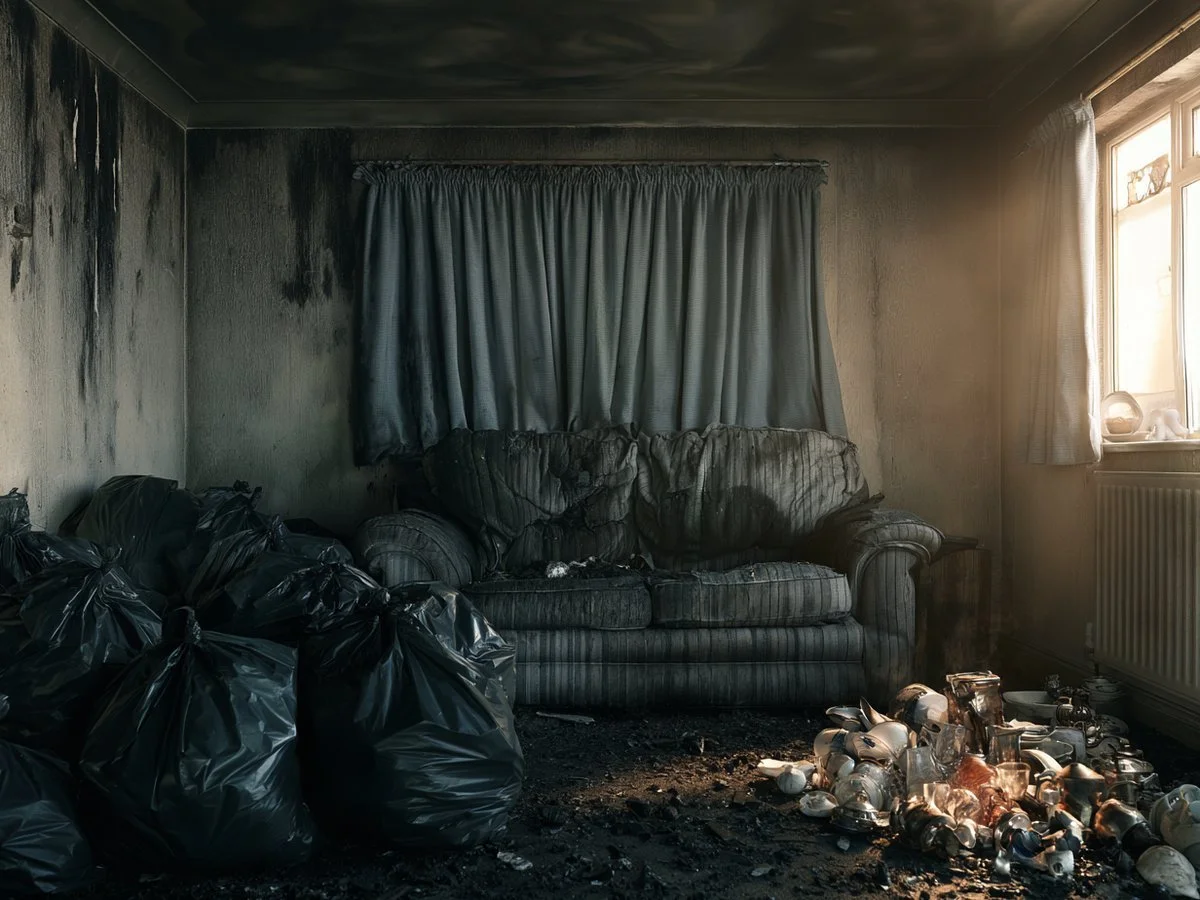
Had a fire at home? We can help you sort it
Soot removal, smoke odour treatment and insurance-ready photo reports. 24/7, 365 days a year, across the UK.
Before you throw anything away
It’s normal to want to start throwing things away the day after the fire, but it’s important to hold off. If you’re claiming on your insurance, your loss adjuster needs to see the damage first, or at least a full record of everything the fire affected.
Before you start clearing things out, make sure you:
- Photograph every room and every damaged item, with close-ups.
- Make a list of what you’re throwing away, with its rough age and value.
- Keep receipts for anything you buy to get by, such as clothes and toiletries.
- Ask your insurer before you dispose of large items like sofas or mattresses.
Not sure what your policy covers? Read does home insurance cover fire damage cleaning?
What to throw away
- Food and drink: anything open, in packets or in cardboard. Smoke and heat get through packaging, and soot carries toxic residues. Tins that are bulging, rusted or were exposed to a lot of heat should go too.
- Fridge and freezer contents: if the power went off or smoke got into the fridge, bin it. If in doubt, throw it out.
- Medicines and cosmetics: heat can stop medicines working properly. Replace prescriptions through your GP or pharmacy.
- Burned or melted items: plastics, electricals with melted casings, and anything scorched.
- Baby items and pet food bowls: bottles, teats, dummies and anything that goes into a child’s mouth.
- Mattresses and pillows that were close to the fire or soaked by fire service water.
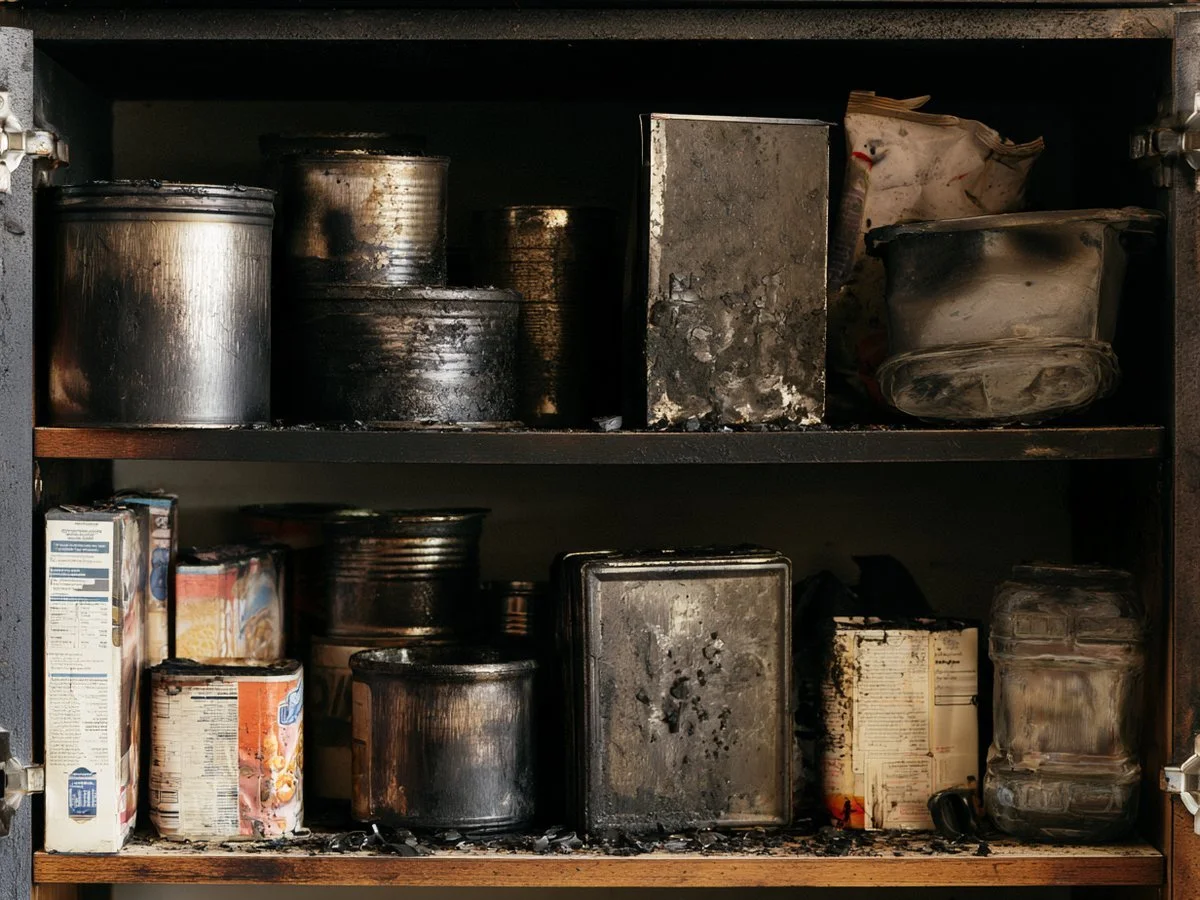
For a fire that stayed in the kitchen, see how to clean your kitchen after a small fire.
What can usually be saved
| Item | Chance of saving | How |
|---|---|---|
| Metal, glass, ceramics | Usually | Specialist soot cleaning |
| Solid wood furniture | Usually | Clean, deodorise, refinish if needed |
| Clothes and bedding | Often | Professional laundering + ozone treatment |
| Books and documents | Sometimes | Specialist drying and deodorising |
| Sofas and curtains | Occasionally | Upholstery cleaning + odour treatment |
| Electricals | Get them checked | A qualified electrician first. Don’t just wipe them down and assume they’re safe. |
We’ll go through it with you
We assess every room, sort what can be cleaned from what has to go, and record it all with photos for your insurer.
Why smoke damage is easy to underestimate
Soot is acidic, so it starts to etch and stain surfaces within days. Smoke also gets into soft furnishings, wall cavities and lofts. That’s why a room can look clean and still smell weeks later, and why insurers usually expect a professional fire damage clean rather than a basic clean.
Read more about how long smoke smell lasts after a fire.
What we do on a fire damage clean
- Walk-through: we assess the extent of the damage and take a full photo record for your insurer.
- Sort: we separate items into bin, clean on site, or take away for specialist cleaning.
- Soot removal from walls, ceilings and contents, using a method matched to the type of smoke.
- Odour treatment with ozone or hydroxyl, to tackle the smell in soft furnishings and the structure.
- Report: an insurance-ready report with photos.
Frequently asked questions
Can I keep tinned food after a house fire?
Only if the tins weren’t exposed to intense heat and aren’t dented, bulging or rusted. If the cupboard got hot, bin them to be safe.
Can clothes be saved after smoke damage?
Often, yes. Normal washing rarely removes the smell, but professional laundering with ozone treatment often does.
Should I throw away my mattress after a fire?
If it was near the fire, got wet, or still smells after airing, replace it. Ask your insurer first.
Does home insurance cover throwing things away?
Contents cover usually pays for items that can’t be saved. Keep photos and a list of everything you throw away.
Who decides what can be saved?
Your loss adjuster has the final say on a claim. We give them a written view on what can be restored.

Had a fire? We can help today
Soot removal, smoke odour treatment and insurance-ready reports, so you can get back into your home. 24/7, 365 days a year, across the UK.
- Insurance-ready photo reports
- 24/7, 365 days a year
- Google 4.9 (183 reviews)
- Trustpilot 4.9 (96 reviews)
Hello, World!