 Written by Katie Welch, Senior Biohazard Cleaning Technician · 8+ years in the industry
Ventilate, bin any open food, then clean from the top down. Grease soot needs a degreaser and warm water. Protein soot (from burnt food) is almost invisible but leaves a strong smell, so wash every surface, even ones that look clean. Clean inside cupboards and the extractor too. If the smell is still there after a week, it has soaked into the walls, ceiling or ducting and needs professional treatment.
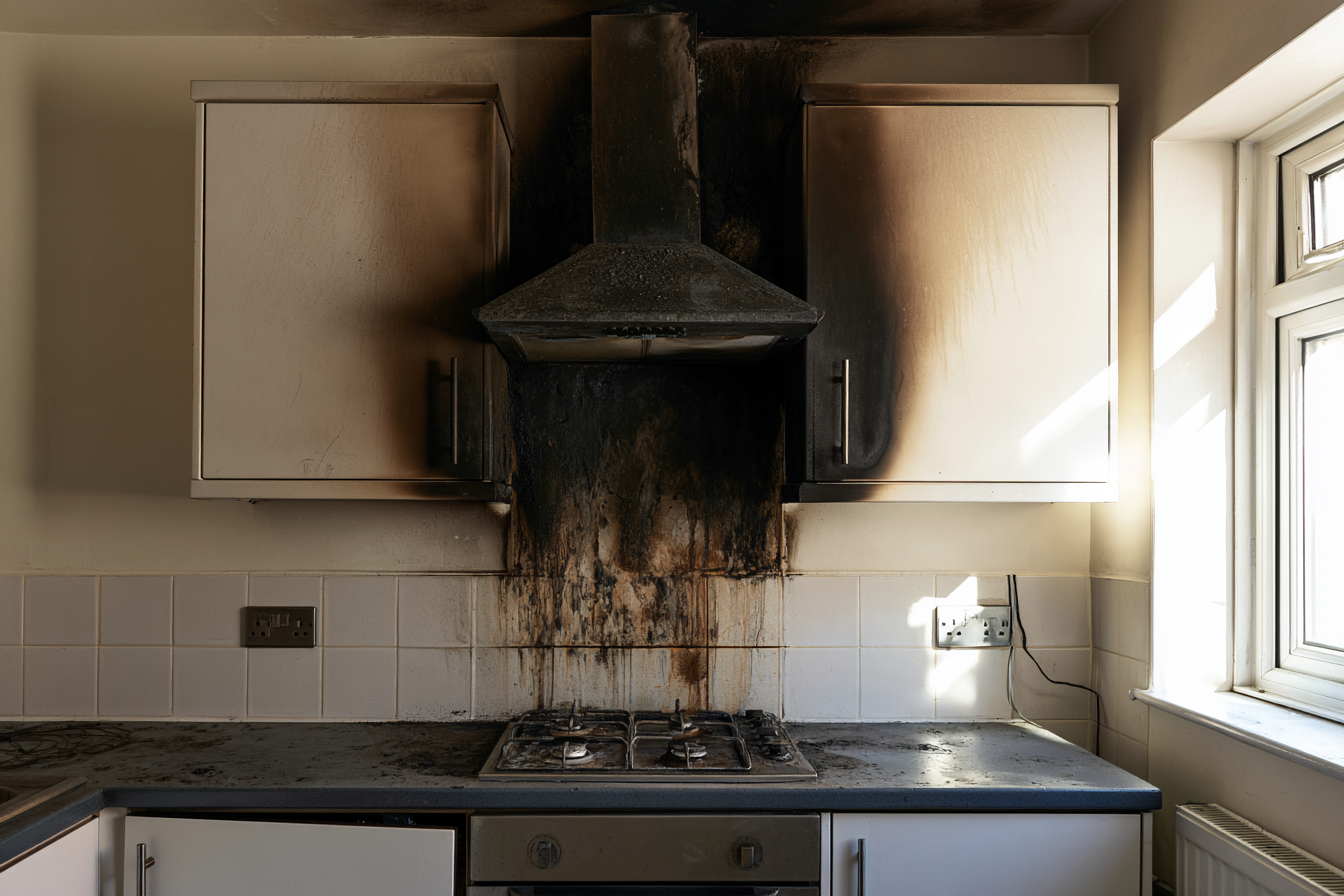
A small kitchen fire is over in minutes, but the mess left behind isn’t. A pan of oil or a forgotten dinner can leave a sticky film or a smell across the whole kitchen, and often reach the rest of the house too. This guide explains how to clean it properly, and how to tell when it’s more than a DIY job.
Smoke smell won’t shift? We treat it at the source
Specialist smoke and soot cleaning, plus deodorising fogging. 24/7, 365 days a year, across the UK.
Before you start
- Make sure the fire is fully out. If the fire service has visited, follow what they told you.
- Check the electrics. Don’t use the cooker, hob or sockets near the fire until they’ve been checked and cleared as safe.
- Open windows and doors throughout the house to keep the air moving.
- Take photos of everything before you clean. If you’re claiming on your insurance, call your insurer first. They may want to see the damage before any cleaning takes place.
- Wear gloves, old clothes and a mask. Soot particles are fine enough to get into your lungs and harm your health.
Grease soot or protein soot: which do you have?
The type of fire decides how you clean it.
Grease soot
Caused by: oil, fat or a chip pan fire
Looks like: black or brown, sticky, and it smears when you touch it
Smell: acrid, oily
How to clean: degreaser first, followed by warm soapy water
Protein soot
Caused by: burnt food, such as meat, beans or a pan left on the hob
Looks like: a thin yellow-brown film, often hard to see at all
Smell: very strong, sour, clings to everything
How to clean: wash every surface, including ones that look clean
Protein soot catches people out. The kitchen looks fine, but the smell won’t go, because the residue is on every wall, ceiling and cupboard door.
What to throw away
- Any open food in the kitchen: bread, fruit, cereal, open packets.
- Food in cupboards near the fire, unless it was in a sealed tin or jar.
- Food in the fridge or freezer if the power went off or smoke got inside.
- Plastic utensils, chopping boards and anything that melted or warped.
- Non-stick pans if the coating is blistered.
If in doubt, throw it out.
When DIY isn’t enough, we can take over
We remove the residue from walls, ceilings, cupboards and ducting, then treat the smell so it doesn’t come back.
How to clean the kitchen, step by step
- Ceiling and walls, top down. Start from the ceiling and high points of the room, so dirty water runs down onto areas you haven’t cleaned yet. If it’s grease soot, use a degreaser first, then rinse it off. If it’s protein soot, use warm water with washing-up liquid and change the water often. Don’t use a wet cloth on dry, powdery soot: it will only smear and push it further into the paint.
- The extractor hood. Take the filters out first. Metal mesh filters can be soaked in hot water and degreaser. Charcoal filters can’t be cleaned and must be replaced. Then wipe inside the hood as far as you can reach.
- Cupboards, inside and out. Empty the cupboards, then wash every shelf, door and hinge. Even if the doors were shut, smoke can still get inside.
- Worktops, tiles and appliances. Wash all hard surfaces, including the top and sides of the fridge and the wall behind the cooker.
- Fabrics. Wash curtains, blinds, tea towels and seat covers on the hottest setting the label allows. Fabric blinds often hold the smell longest because the material is porous.
- Floors last. Sweep or vacuum first, then mop.
Why does the smell keep coming back?
Smoke particles are tiny. They get into paint, plaster, grout, the gaps around units and the extractor ducting. That’s why the smell stays even after you’ve wiped the surfaces, especially when the heating is on.
Air fresheners, candles and bowls of vinegar only mask the smell for a few hours. To get rid of it for good, the residue has to be removed and the smell treated at its source.
Painting over it doesn’t work either. Read can you paint smoke-damaged walls?
When to stop and call a professional
- The smell is still strong after a week of cleaning.
- The smoke spread to other rooms, or upstairs.
- Plastics, wiring or a microwave burnt. The residue can be toxic and needs to be dealt with safely.
- The ceiling is stained, or soot has got inside the extractor ducting.
- You’re claiming on insurance and need it documented.
Our teams clean smoke and soot with specialist products such as Unsmoke Wall Wash. We then treat the smell at the source with deodorising fogging so it doesn’t come back.
If you’re claiming on your insurance, we provide clear photo reports and itemised quotes, which insurers ask for. Not sure what your policy covers? Read does home insurance cover fire damage cleaning.
Frequently asked questions
How do you clean a kitchen after a small fire?
Ventilate, bin open food, then clean from the ceiling down. Use a degreaser on grease soot and warm soapy water on protein soot. Clean inside cupboards and the extractor, wash fabrics, and do the floor last.
What is protein soot?
The residue left behind when food burns, especially meat or beans. It's a thin yellow-brown film that can be hard to see, but it has a very strong smell and covers every surface in the room.
How long does a kitchen fire smell last?
If every surface is cleaned properly, most of the smell should go within a few days. If it's still strong after a week, it has soaked into the walls, ceiling or ducting and needs professional treatment.
Can I keep food after a kitchen fire?
Only food in sealed tins or jars that weren't damaged by heat. Throw away open food, anything in packets near the fire, and anything in a fridge or freezer that lost power or filled with smoke.
Does home insurance cover a small kitchen fire?
Most buildings and contents policies cover fire and smoke damage, including cleaning. Call your insurer before you start cleaning and take as many photos as you can first.

Kitchen fire clean-up? We can help today
We clean grease and protein soot from the whole property, treat the smell at the source, and provide insurer-ready paperwork. 24/7, 365 days a year, across the UK.
- Insurer-ready paperwork
- 24/7, 365 days a year
- Google 4.9 (183 reviews)
- Trustpilot 4.9 (96 reviews)
Hello, World!