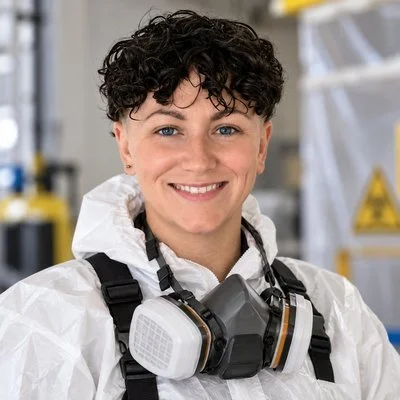
 Written by Katie Welch, Senior Biohazard Cleaning Technician · 8+ years in the industry
Finding sewage in your home can be distressing. It smells awful, and it's hard to know where to start. The good news is that a small spill can be cleaned up safely if you take the right steps. This guide walks you through each one, so you can protect your family and get your home back to normal. And if the job turns out to be bigger than you thought, we'll tell you exactly when to stop and call for help.
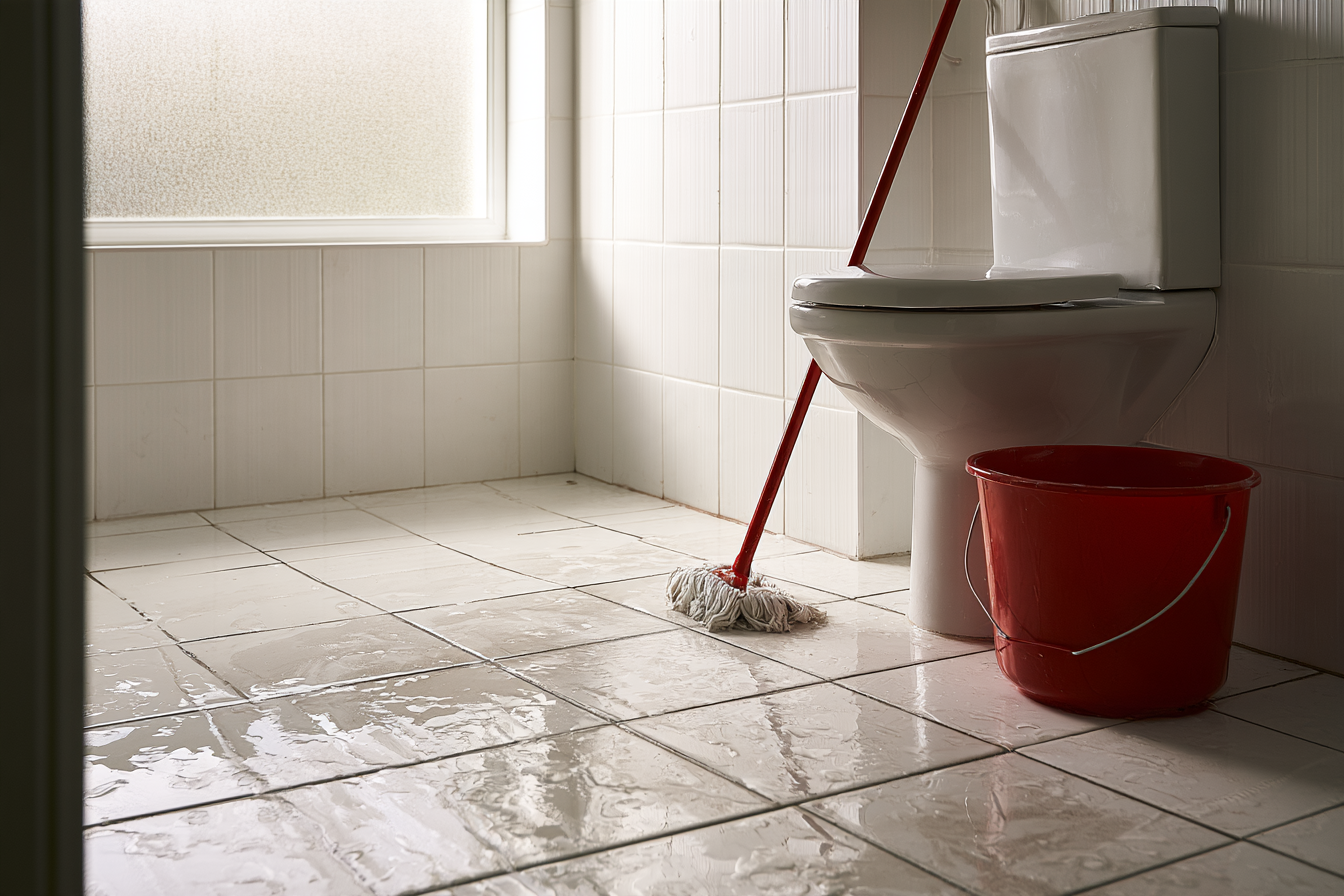
Sewage is Category 3 water, the most contaminated type there is. It carries bacteria and viruses that can make people seriously ill. If it is a small toilet overflow on a tiled floor, it can be cleaned safely with the right steps. However, anything bigger needs professional equipment.
Sewage in your home? We can usually be there in 2 hours
Available 24/7, 365 days a year, across the UK.
Is it safe to clean up sewage yourself?
For a small spill on a hard, sealed floor, yes, but only if you wear protection and follow the steps below. It is crucial to never touch raw sewage with bare skin, as it can carry E. coli, norovirus, hepatitis A and leptospirosis (Weil's disease).
Don't clean it yourself if:
- sewage has soaked into carpet, underlay, plaster or wooden floors
- it has spread to more than one room or under the floor
- it came up through a downstairs toilet, shower or floor drain and keeps coming back
- anyone in the house is pregnant, elderly, very young or has a weak immune system
- you have cuts on your hands or can't wear the right protection
- the leak has been there for more than 24 hours
Read more about the health risks of sewage.
What to do first
- Keep children and pets out of the affected area.
- Turn off the electricity at the fuse box if water is near sockets or appliances. Don't touch electrical equipment while standing in water.
- Stop using water in the house: no flushing, showers, washing machines or sinks. Every drop adds to the overflow.
- Find the source. If neighbours have the same problem, or sewage is coming from a manhole in the street, it's probably the public sewer. If that's the case, call your water company.
- Take as many photos as you can before you clean, for your insurer.
- Open windows to ventilate, but keep internal doors closed.
How to clean up sewage in your house: step by step
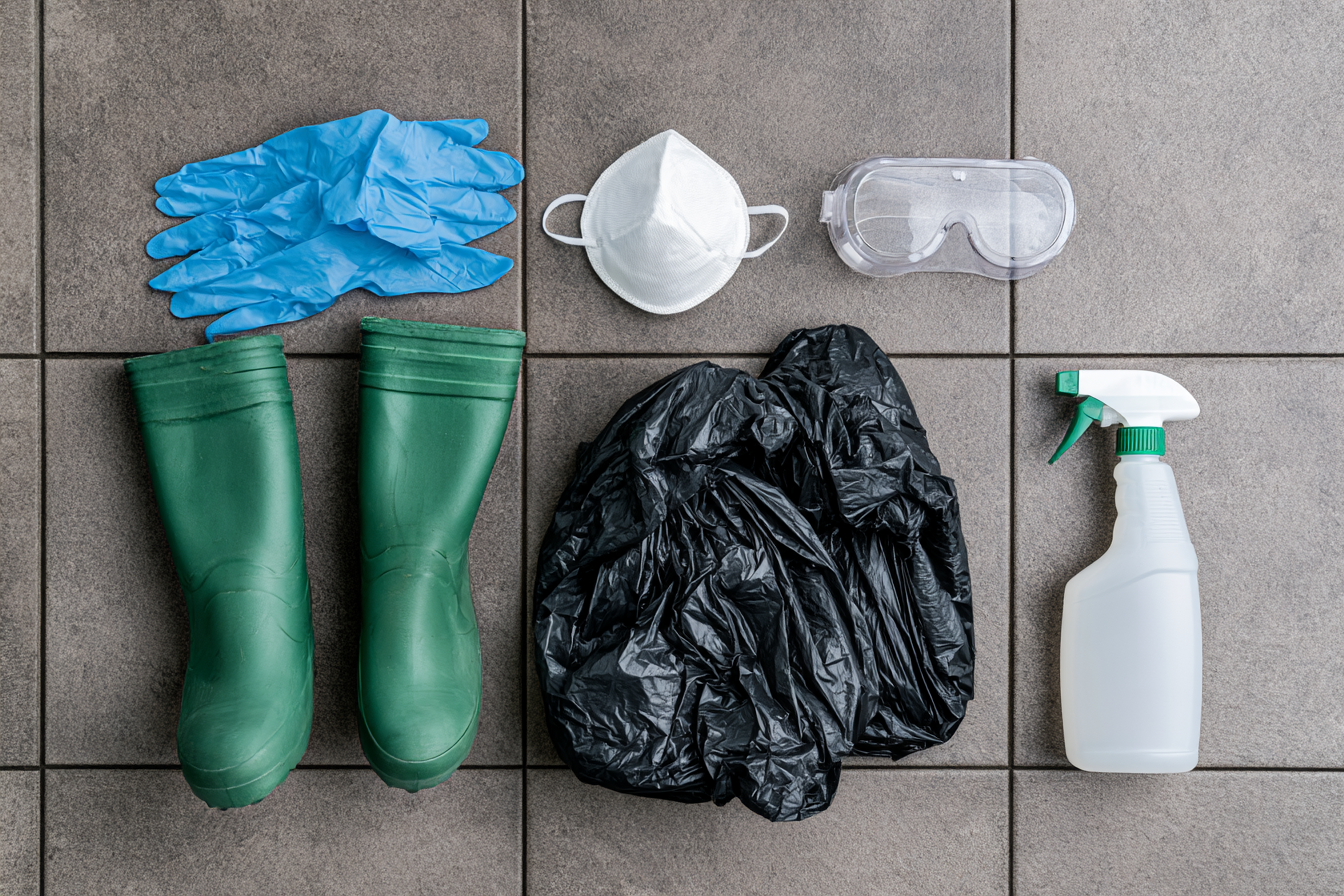
You'll need:
- rubber or nitrile gloves (two pairs)
- wellies
- an FFP3 mask
- goggles
- heavy-duty bin bags
- a shovel, dustpan, buckets, detergent
- a BS EN 1276 disinfectant
- and a wet vac or mop you're happy to throw away.
Steps to take:
1Put your protection on.
Gloves, boots, mask and goggles, with sleeves and trousers covering your skin.
2Remove solid waste.
Scoop it into double-bagged heavy-duty bags. Don't use a household vacuum.
3Remove standing water
with a wet vac, mop or old towels. Bag the towels afterwards.
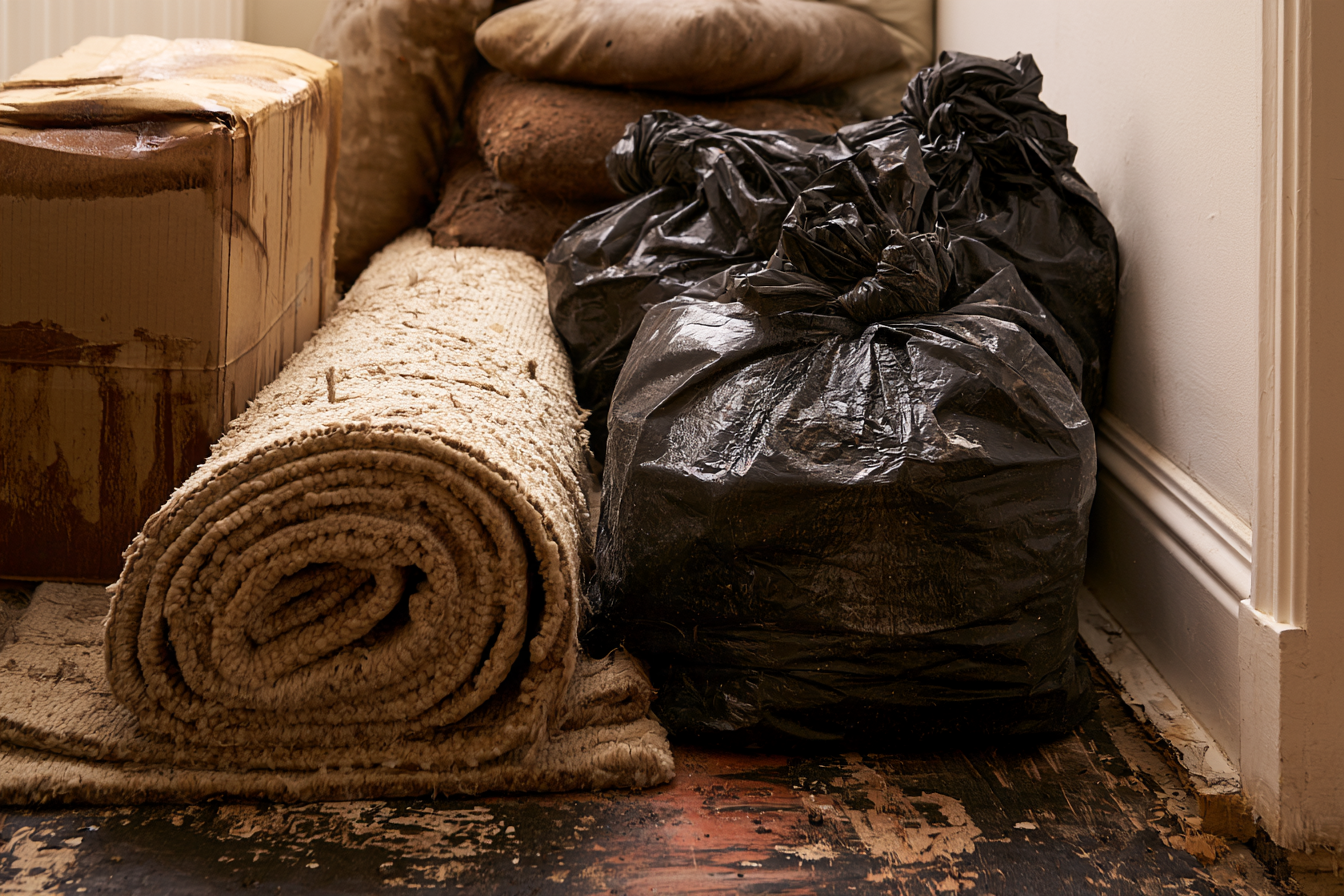
4Throw away soaked soft items.
This includes: carpet, underlay, rugs, mattresses, cushions, and cardboard. These can't be made safe once sewage has soaked in. Bag them and don't put them in the household bin. See What to throw away below.
5Wash all hard surfaces with detergent and hot water.
Disinfectant doesn't work properly on dirty surfaces, so clean first.
6Disinfect everything the sewage touched, plus 30 cm to 50 cm beyond it.
You must leave the disinfectant on for the full contact time on the label. This is often between 5 and 15 minutes.
7Rinse and dry.
The best method for this is by using fans and a dehumidifier. It's important for floors and walls to be completely dry before anything goes back.
8Clean or bin your kit.
Wash boots and tools with disinfectant. Bag gloves, mask and cloths.
Shower, and wash your clothes separately on a hot wash.
Spill bigger than you thought? Stop and call us
We can usually be onsite within 2 hours.
What disinfectant kills sewage bacteria?
Use a disinfectant tested to BS EN 1276, which confirms it kills bacteria. BS EN 14476 will show that it kills viruses. Make sure you look for these numbers on the labels of the disinfectant you will want to buy. Household bleach diluted correctly will kill many germs on hard surfaces, but it doesn't work well on dirty or porous surfaces.
On our jobs, we clean with Virosol. This breaks down the heavy soiling first so it can be removed. We then disinfect with Byotrol.
Important
Never mix bleach with other cleaners, especially anything containing ammonia or acid. This can pose a serious health risk.
Sewage backup in a shower, bath or downstairs toilet: what to do
If sewage comes up through a shower tray, bath or downstairs toilet, then it means the drain is blocked further down the line. The lowest outlet in the house overflows first.
- Stop using all water straight away.
- Don't plunge or flush to try to clear it. This can end up pushing more sewage up.
- Check outside. If the manhole on your property is full, the blockage is in your drain or the sewer beyond.
- Call a drainage company or your water company to clear the blockage before you start cleaning, otherwise it will happen again.
Clean the shower or bath with detergent, then disinfectant, and run the taps only once the drain has been cleared.
What to throw away after a sewage leak
Throw away
- Carpet and underlay
- Mattresses, sofas and cushions
- Soaked plasterboard (below the flood line)
- MDF and chipboard furniture
- Food, toiletries and medicines that were exposed
- Cardboard, paper, soft toys
Can usually be cleaned
- Tiles, vinyl and laminate (if water hasn't got underneath)
- Glass, metal and hard plastic
- Sealed wood and painted surfaces
- Washable clothes (hot wash, separately)
- Dishes and cutlery (hot wash or dishwasher)
If you're claiming through insurance, photograph everything before it goes, and keep a detailed list of everything.
When to stop and call a specialist
Call a professional if you're not sure, and always when:
- sewage has reached carpets, walls or under the floor
- the smell is still there after cleaning and drying
- there's a lot of water, or it covers more than one room
- the leak happened in a rented property, business or communal area
- you need paperwork for an insurer or landlord
We remove contaminated materials, clean and disinfect, dry the property with commercial dehumidifiers, and remove all waste legally. We can usually be onsite within 2 hours.
Frequently asked questions
Can I clean up sewage myself in the UK?
Yes, for a small spill on a hard floor. But you must wear gloves, boots, a mask and eye protection, and use a proper disinfectant. If sewage has soaked into carpet, plaster or under floors, it's important to call a specialist.
What kills sewage bacteria?
A disinfectant tested to BS EN 1276 that targets bacteria is crucial. Ideally, to target viruses it will also be tested to BS EN 14476. This must be used on a surface you've already cleaned with detergent. Leave it on for the full contact time as indicated on the label.
Can you save carpet after a sewage leak?
No. Carpet and underlay that sewage has soaked into should be removed and thrown away. As it is a soft furnishing it cannot be made safe once affected.
How long does it take to clean up a sewage leak?
A small spill can be cleaned in a few hours. However, drying can take several days. An extensive professional clean usually takes 1 to 3 days, plus drying time.
Is it safe to stay in the house after a sewage leak?
It's usually safe to stay in unaffected rooms if the contaminated area is closed off and you're not using water. If the sewage has spread throughout the ground floor, or anyone vulnerable lives there, it is safer to stay elsewhere until it's cleaned.
Does home insurance cover sewage clean-up?
Many buildings insurance policies do cover sewage damage and clean-up. Always check your policy first, and take as many photos as you can before you start.
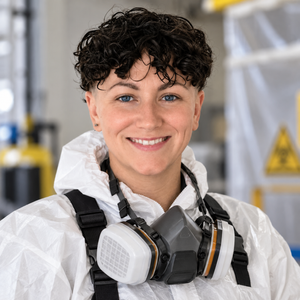
Sewage leak? We can help today
We remove contaminated materials, clean and disinfect, and dry the property with commercial dehumidifiers. 24/7, 365 days a year, across the UK.
- Usually onsite within 2 hours
- 24/7, 365 days a year
- Google 4.9 (183 reviews)
- Trustpilot 4.9 (96 reviews)